Review: Laughing Tribe Chief for Holiday Embroidery
As a designer who spends more time staring at stitch simulations than actual sunlight, I approach every new machine embroidery design with a healthy dose of skepticism. We have all been there: you download a file that looks vibrant on the screen, only to watch it turn into a puckered mess of thread breaks and registration errors once it hits the hoop. That is why I took a close look at the Characters of Laughing Tribe Chief before committing it to any client projects or holiday inventory. This isn't just a quick glance at a thumbnail; this is an evaluation of how this specific Illustrations asset holds up when translated from a vector concept to a tangible, stitched reality.
First Impressions: Mood and Visual Personality
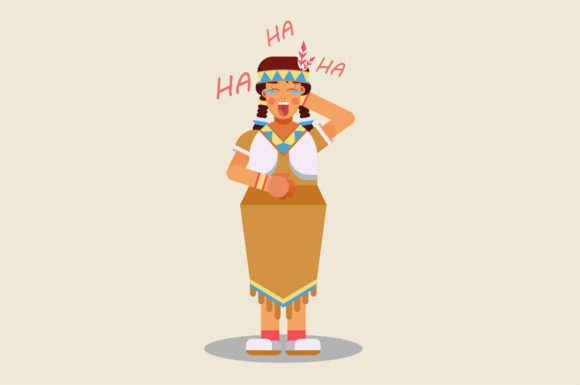
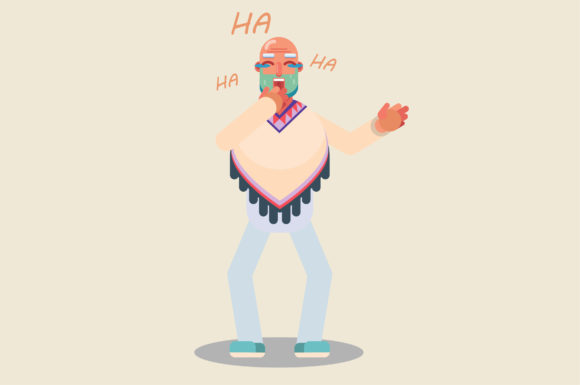
The first thing that strikes me about the Characters of Laughing Tribe Chief is its undeniable energy. In a market saturated with generic pilgrims and static turkeys, this illustration brings a sense of genuine joy and movement. The lines are fluid, suggesting a character that is approachable and fun rather than stiff or overly traditional. For a designer, this visual personality is crucial. It tells me immediately that this piece belongs on items meant to spark conversation or bring a smile, rather than formal, heirloom-quality linens.
When evaluating the layout, the composition feels balanced. The character stands well on its own, which is essential for a standalone motif on a pocket or a chest logo. However, because the source material is described as a vector illustration often used for stickers, my immediate concern as an embroiderer is translation. Vectors rely on smooth gradients and infinite resolution, whereas embroidery relies on discrete stitches and physical thread limits. The "laughing" aspect implies open mouths and expressive eyes, details that can easily get lost if the stitch density is too high or if the scale is reduced too far.
Real-World Application: From Screen to Stitch
To truly test the viability of this design, I imagined a specific real-life scenario: preparing a run of custom tote bags for a local boutique's Thanksgiving promotion. The goal was to create a handmade product that felt festive but modern. I visualized the Characters of Laughing Tribe Chief stitched onto a natural canvas tote using warm autumn thread colors—burnt orange, deep gold, and a rich brown.
In this context, the design shines. The cheerful nature of the chief character complements the casual vibe of a tote bag. Unlike complex scenic designs that require thousands of stitches and hours of machine time, this character-focused graphic suggests a quicker turnaround, making it ideal for Etsy seller inventory or last-minute holiday embroidery gifts. If the digitization is done correctly, converting those vector shapes into solid fill stitch areas with clean satin stitch borders, the result would be a crisp, professional-looking emblem that elevates a simple bag into a seasonal statement piece.
Beyond tote bags, I can see this working exceptionally well on sweatshirt embroidery. The thicker fabric of a fleece hoodie provides a stable base that can handle the density required to make the character pop. Imagine a oversized crewneck with this character centered on the chest; it creates an instant "uniform" for family gatherings or staff uniforms for a harvest festival event. The simplicity of the character allows it to scale well, whether it is a small patch on a sleeve or a large back design.
Navigating Fabric and Hoop Challenges
However, enthusiasm must be tempered with technical reality. Not every surface is friendly to every design. When considering the Characters of Laughing Tribe Chief, I have to be careful about where I place it. For instance, applying this to a structured cap is risky. Curved surfaces distort designs, and if the character has wide horizontal elements (like a headdress or outstretched arms), they might warp awkwardly over the front panel of a hat. Unless the file has been specifically digitized for caps with pull compensation, I would avoid this application.
Similarly, fabric texture plays a massive role. On a waffle-knit towel or a highly textured linen, fine details in the face or clothing of the character could sink into the weave, losing definition. For these materials, I would recommend using a heavier cut-away stabilizer to keep the fabric rigid during stitching. Conversely, on stretchy fabrics like baby onesies, the risk of puckering is high. If you plan to use this for baby embroidery, you must ensure the stitch count isn't too dense, or the garment will become stiff and uncomfortable against sensitive skin.
Dark fabrics present another consideration. If the original vector relies on light colors for definition, stitching it directly onto black navy blue might require an underlay strategy that isn't immediately obvious from the preview. You may need to manually add a white underlay in your editing software to prevent the dark fabric from showing through the thread colors, ensuring the "laughing" expression remains visible.
Commercial Value and Brand Consistency
For those running a craft business, the visual appeal of a design directly correlates to perceived value. The Characters of Laughing Tribe Chief has a unique style that avoids the clip-art look of cheaper, mass-produced files. This uniqueness builds customer trust. When a buyer sees a cohesive, well-executed character on a personalized gift, they associate that quality with your brand. It suggests professionalism and attention to detail.
Using this design in a series can also help with brand consistency. If you are creating a line of holiday gifts, this character could become a mascot for your shop's seasonal collection. It offers recognition; customers start to associate that specific laughing chief with your store's quality. Furthermore, because the source is a vector illustration, it likely adapts well to printable mockup creation. Before you even stitch a single thread, you can place the graphic on digital photos of t-shirts or mugs to gauge market interest, a crucial step for minimizing waste in a small shop product lineup.
Essential Designer Notes and Testing Protocol
Before you load this file into your machine for a paid order, there are practical steps you must take. First and foremost, test the design on scrap fabric that matches your final project material. Do not skip this. Watch how the machine handles the transitions between color blocks. Are there excessive trims? Does the needle break on dense areas?
You should also review the stitch density closely. If the design feels too heavy, consider reducing the density in your embroidery software to improve drape, especially for apparel. Check the smallest details, such as the eyes or mouth lines. If they are too small for your chosen hoop size or thread weight, they may merge into a blob. In some cases, simplifying the design by removing tiny running stitch details in favor of larger shapes yields a cleaner finished product.
It is also vital to verify the licensing terms. While the description mentions it can be used as a sticker and implies commercial viability for illustrations, embroidery rights can differ. Confirm whether the license covers physical goods sold on Etsy or in boutiques, or if it is restricted to digital use. Never assume a vector license automatically grants rights for commercial embroidery without checking the specific text provided by the creator.
Finally, compare the design on both light and dark backgrounds. A design that looks perfect on white might vanish on charcoal. If necessary, adjust the thread palette to ensure high contrast. By taking these precautions, the Characters of Laughing Tribe Chief transforms from a simple digital asset into a reliable tool for your creative arsenal, ready to bring warmth and humor to your next embroidery project.