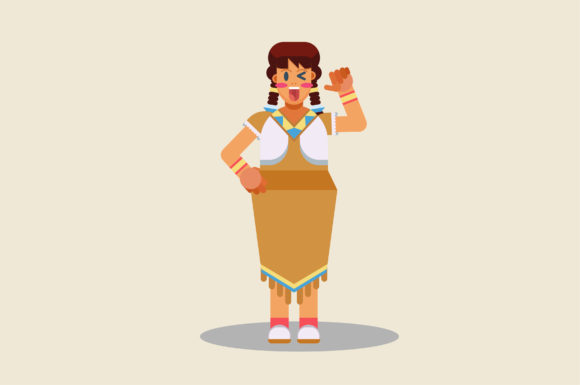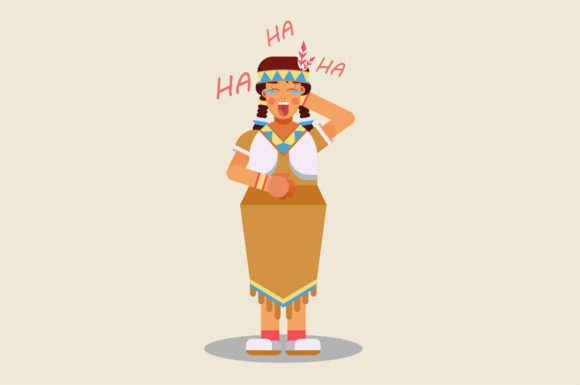
Review: Characters of Simple Cute Girl for Holiday Embroidery
As a designer who spends more time staring at stitch simulations than most people care to admit, I approach new design assets with a mix of excitement and skepticism. When I first opened the file for Characters of Simple Cute Girl, my immediate reaction was one of relief. In a market saturated with overly complex, dense vectors that look great on a screen but turn into thread nests on fabric, this set offers a refreshing simplicity. The description promises a "happy Thanksgiving" vibe with colorful vector illustrations suitable for stickers, but my mind immediately went to how these would translate into a tangible machine embroidery design for a client's holiday collection.
First Impressions and Visual Personality
The mood created by Characters of Simple Cute Girl is undeniably warm and inviting. The lines are clean, avoiding the jagged edges that often plague low-resolution Graphics. For an embroidery project, this is crucial. The shapes feel friendly and approachable, perfectly suited for the cozy aesthetic of late autumn. The layout suggests a character-centric focus rather than a busy background scene, which gives us, as decorators, the flexibility to place these motifs on various products without overwhelming the garment.
Visually, the personality of these characters leans towards the whimsical. They aren't trying to be hyper-realistic; instead, they embrace a stylized charm that works exceptionally well for a handmade product. When evaluating the detail level, I noticed that the elements are distinct enough to hold their own but simple enough to prevent thread breaks. This balance is rare. Many designers make the mistake of adding too much noise to holiday themes, but here, the restraint allows the thread colors to do the heavy lifting. It feels like a design that respects the medium of embroidery rather than fighting against it.
Real-World Application: The Holiday Tote Scenario
To truly test the viability of Characters of Simple Cute Girl, I imagined a specific real-life scenario: a small boutique owner preparing a limited run of custom tote bags for Thanksgiving guests. These aren't just any bags; they need to be durable, washable, and visually striking enough to be used repeatedly during the holiday season.
In this context, the design shines. Because the illustration is described as easy to use, I envision applying it using a combination of satin stitch for the outlines and a light fill stitch for the interior colors. On a canvas tote, the texture of the fabric can sometimes swallow fine details, but the bold nature of these characters ensures they pop. Imagine stitching this onto a natural cotton bag with warm orange and deep red threads. The result would be a personalized gift that feels high-end yet accessible.
Beyond tote bags, this design is a strong contender for sweatshirt embroidery. The soft, rounded shapes of the characters complement the cozy texture of fleece or French terry cloth. If I were producing these for an Etsy seller, I would recommend placing the character on the left chest for a subtle look or centered on the back for a statement piece. The versatility extends to baby embroidery as well; the cute factor is high enough to work on onesies or bibs, provided the stitch density is adjusted for sensitive skin.
Navigating Fabric Challenges and Technical Constraints
However, no design is without its challenges, and a professional review must address where caution is needed. While Characters of Simple Cute Girl appears robust, certain applications require careful planning. If you are working with stretchy fabrics like jersey knits, the stability of the design becomes paramount. Without a proper stabilizer, even simple shapes can pucker, distorting the happy expression of the character.
Another consideration is the hoop size. Although the design seems scalable, shrinking it too much for items like cap fronts or small patches could cause the details to merge. Tiny lettering or intricate corners, if present in the vector source, might disappear entirely when converted to stitches at a small scale. I always advise testing the design on scrap fabric first, especially when moving from a light background to a dark fabric. The contrast of the thread colors needs to be re-evaluated when the background changes from white to navy or black.
Furthermore, curved surfaces like baseball caps present a unique challenge. The flat nature of a vector illustration doesn't always account for the curvature of a cap panel. If you attempt to stitch this directly onto a structured cap without digitizing adjustments for pull compensation, the final product might look warped. For these tricky surfaces, creating an embroidered patch separately and then sewing or heat-pressing it onto the item is often a safer, more professional bet.
Impact on Brand Value and Customer Perception
Using a well-chosen design like Characters of Simple Cute Girl directly affects the perceived value of your finished product. Customers can tell the difference between a generic, clip-art style image and a thoughtfully integrated embroidery element. When the stitching is clean and the design choice feels intentional, it builds trust. It tells the buyer that the creator cares about quality.
For commercial embroidery projects, consistency is key. If you are building a brand around holiday decor, using a cohesive set of characters helps establish recognition. Whether it's on a pillow cover, a kitchen towel, or an apron, the visual language remains consistent. This strengthens brand identity and makes your small shop product stand out in a crowded marketplace. A happy, well-executed character on a tea towel transforms a mundane household item into a festive centerpiece, increasing its "giftability" factor significantly.
Practical Notes for the Professional Maker
Before committing to a full production run, there are several practical steps every designer should take with this specific asset. First, verify the licensing terms. The description mentions it can be used as a sticker and implies ease of use, but you must confirm whether the license covers digital embroidery file sales or only finished physical goods. Selling the raw file versus selling the stitched item are two very different legal landscapes.
Next, pay attention to stitch density. Vector illustrations are infinitely scalable, but embroidery threads have physical limits. If the original graphic has large areas of solid color, ensure your digitizing software converts these into efficient fill patterns rather than dense blocks that will make the fabric stiff. Test the design in both color and black-and-white mockups to ensure the silhouette holds up even without the vibrant holiday hues.
Finally, consider the end-user experience. Will this holiday embroidery withstand frequent washing? If it's for a child's item or a kitchen towel, durability is non-negotiable. Check the underlay stitches and ensure the edges are secured properly to prevent fraying. By taking these precautions, you ensure that Characters of Simple Cute Girl not only looks good on the hoop but performs beautifully in the hands of your customer.
In conclusion, this set of Illustrations offers a solid foundation for creative entrepreneurs looking to capture the Thanksgiving spirit. With the right technical approach and an eye for detail, it can elevate a wide range of products from simple crafts to boutique-quality merchandise.