Review: Characters of Cute Native Girl for Holiday Embroidery
As a designer who spends more time staring at stitch simulations than actual people, I approach every new digital embroidery file with a healthy dose of skepticism. We have all been burned by beautiful vector graphics that turn into thread nightmares once the needle hits the fabric. Today, I am taking a close look at Characters of Cute Native Girl, a Thanksgiving-themed illustration set that promises cheerful, unique characters suitable for stickers and various creative applications. My goal here is not just to describe the art, but to evaluate its viability as a machine embroidery design for real-world client projects and small business inventory.
First Impressions and Visual Personality
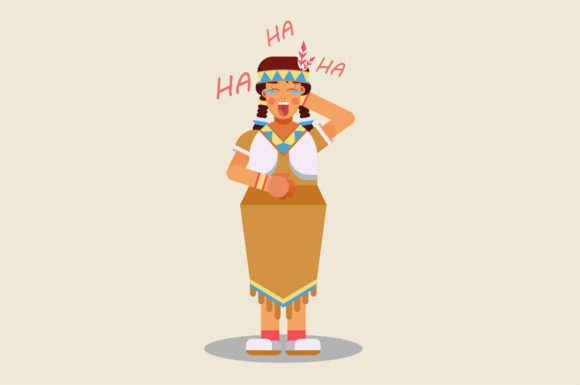
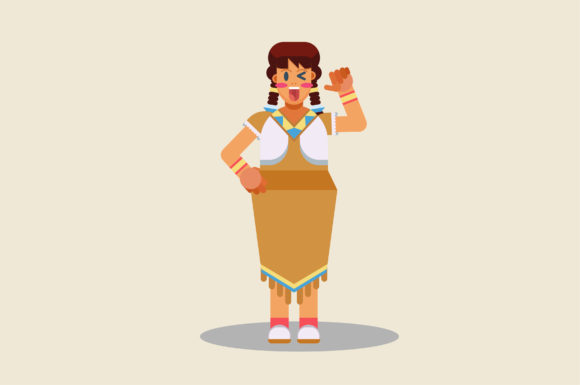
When I first pulled up the Characters of Cute Native Girl assets, the immediate takeaway was the mood. These are not stiff, historical reenactment figures; they are joyful, stylized, and undeniably cute. The lines are clean, and the character proportions suggest a modern, boutique aesthetic rather than a traditional folk look. For an Etsy seller or a boutique owner, this visual personality is gold. It fits perfectly into the current trend of whimsical holiday decor that feels warm and inviting without being overly serious.
However, translating an Illustration or Graphics file into thread requires a different eye. The original description notes these can be used as stickers, which implies bold outlines and distinct color blocks. In embroidery terms, this usually translates well to satin stitch borders and solid fill stitch areas. The lack of excessive shading in the source art is a positive sign; it suggests the digitizer (or you, if you are digitizing this yourself) won't have to fight against complex gradients that require thousands of tiny stitches. The layout feels open and airy, which is crucial for maintaining clarity when scaled down for things like baby clothes or up for large tote bags.
Real-World Application Scenarios
Let's move from the screen to the hoop. I recently had a request for a limited run of holiday kitchen textiles for a local café, and Characters of Cute Native Girl immediately came to mind as a candidate for their seasonal tote bag design and apron line. The cheerful nature of the characters aligns perfectly with a hospitality setting where the goal is to make customers feel welcome.
Imagine stitching these characters onto a natural canvas tote bag. The contrast between the earthy fabric texture and the vibrant thread colors of the Thanksgiving theme would create a striking finished product. Because the characters are described as "unique," they offer a point of differentiation for a craft business trying to stand out in a sea of generic turkey motifs. They would also work exceptionally well as a central motif on a sweatshirt embroidery project. A oversized, cozy crewneck featuring one of these girls holding a harvest item could be a best-seller for a small shop product line targeting young families.
For those focusing on the nursery market, these characters have strong potential for baby embroidery. The soft, friendly faces are non-threatening and engaging for infants. Applied to a muslin swaddle or a bib, they elevate a simple item into a thoughtful personalized gift. The key here is the "cute" factor; it avoids the stiffness that sometimes plagues historical indigenous imagery in mass-market goods, opting instead for a respectful, celebratory, and adorable interpretation suitable for children's items.
Technical Considerations and Fabric Challenges
While the artistic merit is high, we must address the technical execution. Not every surface is ready for Characters of Cute Native Girl. If you are planning to stitch this onto a textured waffle weave or a highly stretchy performance fabric, you need to proceed with caution. Detailed corners and small features, common in character illustrations, can get lost or distorted on uneven surfaces. A stabilizer with significant tear-away or cut-away strength will be non-negotiable here to prevent puckering, especially if the design has dense areas.
Curved surfaces present another hurdle. Placing this design on a structured cap is possible, but you must consider the hoop size limitations and the curvature of the brim. If the character has fine details like eyelashes or small pattern elements on clothing, these might merge together if the stitch density is too high or if the fabric pulls during stitching. I always recommend running a test on scrap fabric of the exact same weight and weave as your final material. Do not skip this step. Seeing how the thread colors interact with a dark navy versus a cream background can change your entire color strategy.
Furthermore, consider the washability. Items like kitchen towels and aprons undergo frequent laundering. If the design relies heavily on long satin stitches without proper underlay, they may snag or loosen over time. For commercial viability, durability is as important as aesthetics. You might need to adjust the stitch direction or add tack-down stitches to ensure the embroidered patch effect holds up after twenty cycles in the washer.
Enhancing Brand Value and Customer Trust
Using high-quality, distinctive designs like Characters of Cute Native Girl directly impacts your brand perception. When a customer sees a crisp, well-executed character on a product, it signals professionalism. It tells them that care went into the creation, fostering trust in your handmade product. In contrast, a poorly executed version of a cute character can look childish in a negative way, damaging the perceived value of the item.
For commercial embroidery projects, consistency is key. If you are creating a collection, ensure that the scale of these characters remains consistent across different items. A giant version on a pillow cover should look just as balanced as the miniature version on a napkin ring. This attention to detail helps in building a cohesive brand identity that customers recognize and return to.
Practical Notes for Designers and Makers
Before you commit to producing a full batch of goods, keep these practical steps in mind:
- Check Licensing: The product description mentions use as a sticker and illustration. Before selling finished physical goods or digital derivatives, confirm the specific license terms. Can you sell the stitched item? Can you resell the digitized file? Never assume.
- Mockup Testing: Create black and white mockups first. This strips away the distraction of color and lets you see if the shapes and silhouettes hold up. If it looks muddy in grayscale, it will likely stitch out poorly.
- Contrast Review: Ensure your chosen thread palette offers enough contrast between the character and the background fabric. Low contrast can make the details vanish from a distance.
- File Verification: Since the source is described as a vector illustration, verify if you are receiving a pre-digitized embroidery file or if you need to digitize it yourself. If you are digitizing, pay close attention to the underlay settings to manage the fabric texture.
- Small Detail Inspection: Zoom in on the smallest elements. If there are tiny dots or thin lines, determine if they are feasible for your machine's minimum stitch length. Sometimes, simplifying the design slightly yields a cleaner result.
In conclusion, Characters of Cute Native Girl offers a delightful foundation for holiday-themed projects. Its strength lies in its cheerful, approachable style that bridges the gap between traditional Thanksgiving motifs and modern boutique trends. With careful attention to fabric selection, stabilization, and licensing, this design asset can become a cornerstone of a successful seasonal collection for apparel decorators and craft entrepreneurs alike.