Funny Indian Character: A Designer's Embroidery Review
As a designer who spends more time staring at stitch simulations than most people care to admit, I approach every new machine embroidery design with a mix of curiosity and skepticism. When I first pulled up the Character of Funny Indian, my initial reaction wasn't just about whether it was cute—it was about whether it would hold up under the needle. In our line of work, a graphic that looks perfect on a screen can turn into a tangled mess of thread if the lines are too tight or the details too fine. This review breaks down how this specific vector illustration translates from a digital Graphics file to a tangible, stitched reality.
First Impressions and Visual Personality
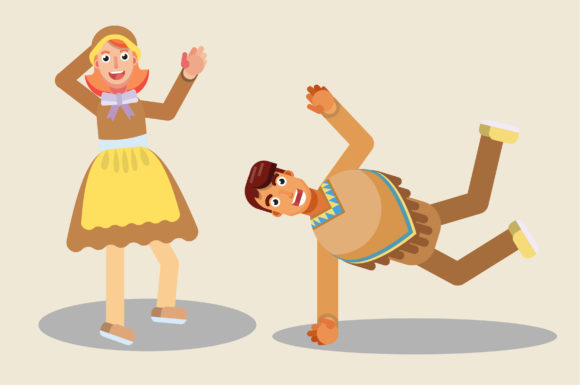
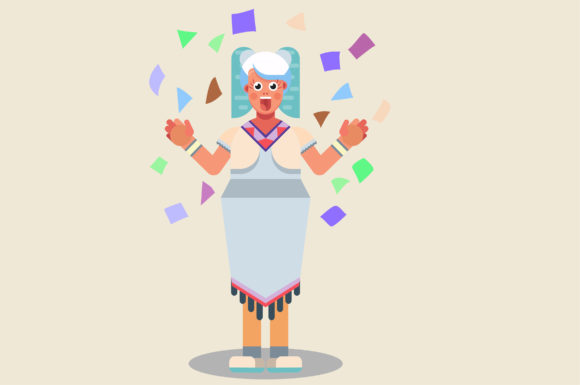
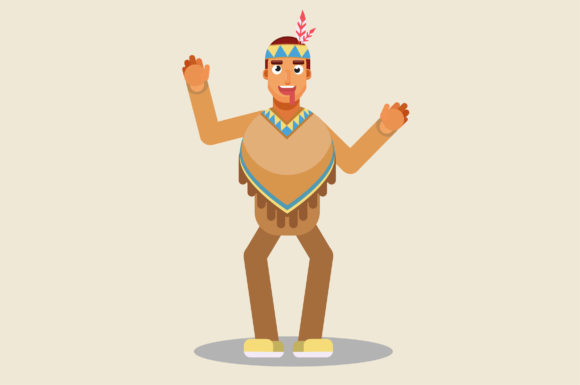
The Character of Funny Indian immediately strikes a chord with its grateful and peaceful vibe, perfectly suited for the Thanksgiving season. Visually, it leans into a simple vector style, which is often a blessing for embroiderers. Complex gradients and microscopic details in Illustrations usually spell disaster for standard home machines, but the clean lines here suggest a straightforward translation to thread. The character exudes a friendly, approachable mood, making it an ideal candidate for projects meant to evoke warmth and nostalgia.
From a layout perspective, the design feels balanced. It doesn't appear overly dense in any single area, which is crucial for maintaining fabric drape. When I imagine this as a finished product, I see it working best where the silhouette can stand out clearly. The "funny" aspect comes through in the expression and posture, offering a whimsical touch that avoids being overly childish. This versatility is key; it allows the design to bridge the gap between nursery decor and adult holiday apparel.
Real-World Application: The Holiday Tote Scenario
To truly test the viability of the Character of Funny Indian, I mentally ran through a common client request: a set of custom embroidered tote bags for a family Thanksgiving gathering. This is a classic use case for commercial embroidery and small batch production. For this project, the simplicity of the vector becomes a major asset. Tote bags often have a woven texture that can swallow up fine details, but the bold shapes in this character should pop nicely against canvas or heavy cotton.
Imagine stitching this onto a natural-colored bag using warm autumn tones—burnt orange, deep brown, and cream. The thread colors would need to be selected carefully to ensure the character doesn't blend into the background. If I were producing these for an Etsy seller or a boutique shop, I would likely recommend using a satin stitch for the outlines to give it a crisp, defined edge, while utilizing a fill stitch for the larger body areas to ensure durability. The result would be a high-quality handmade product that feels professional rather than homemade in the amateur sense.
Beyond totes, this design shines on sweatshirt embroidery. The cozy nature of a fleece hoodie pairs well with the peaceful theme of the character. However, one must be cautious with stretchy fabrics. Without the right stabilizer, even a simple design can pucker, distorting the funny expression into something unintentional. For a personalized gift like a baby onesie, the scale would need to be reduced significantly, which brings us to the limitations of the design.
Technical Considerations and Fabric Challenges
While the Character of Funny Indian is versatile, it is not without its constraints. The description notes it is a "simple vector illustration," which is great, but "simple" can sometimes mean a lack of internal detail that helps define features when stitched. If you are planning to use this on dark fabric, you must ensure the digitized version includes a proper underlay or that you plan your stitch sequence to cover the base material effectively. A running stitch might look elegant on paper but could get lost on a black towel.
There are specific scenarios where caution is advised. If you intend to place this on a curved surface like a cap, the center of the design needs to be robust enough to handle the tension of the hoop without shifting. Similarly, if the original embroidery file contains very thin lines or tiny corners, these are the first points to fail during washing. For items like kitchen towels or aprons that face frequent laundering, I would advise checking the stitch density. Too light, and the threads will snag; too heavy, and the fabric will become stiff and board-like.
It is also vital to consider the hoop size relative to the design. If the character is tall and narrow, it might fit in a smaller hoop, but if it has wide arm gestures, you might need a larger frame. Always check the specific dimensions provided with the digital embroidery file before committing to a project. Furthermore, since the source material mentions it can be used as a sticker, the lines are likely closed and solid, which is excellent for creating an embroidered patch. Applying this as an applique design could add a lovely textured dimension, provided the edges are secured tightly.
Enhancing Brand Value and Customer Trust
For craft business owners and creative entrepreneurs, the choice of design directly impacts brand perception. Using a well-executed character like the Character of Funny Indian can elevate a small shop product from generic to giftable. Customers appreciate clarity and professionalism. When a design stitches out cleanly with no gaps or puckering, it builds trust. It tells the buyer that the maker cares about quality.
This design fits seamlessly into a lineup of holiday embroidery offerings. Whether used for baby embroidery on a bib or as a focal point on a pillow cover, its grateful theme resonates emotionally. In the world of printable mockup creation for online listings, this character offers strong visual appeal. It photographs well because of its distinct shape, making it easier to market on social media platforms where visual impact drives engagement.
Final Designer Notes and Best Practices
Before integrating the Character of Funny Indian into your production workflow, there are several practical steps to take. First, always test the design on scrap fabric that matches your final material. This allows you to check thread color contrast and verify that the stitch density is appropriate for the textile weight. Second, review the small details. If there are eyes or small accessories on the character, ensure they are large enough to stitch clearly at your intended size.
It is also wise to view the design in a black-and-white mockup to assess its value structure. If the design relies solely on color to define its shape, it may lose its impact when stitched in monochrome or low-contrast threads. Additionally, confirm the licensing terms. While the description suggests it is easy to use, always verify if the design assets allow for commercial sale of finished items or if there are restrictions on the number of physical goods you can produce.
In conclusion, the Character of Funny Indian is a promising asset for the upcoming holiday season. Its simple yet expressive nature makes it adaptable for various custom apparel and home decor projects. With careful attention to stabilizer choice, thread selection, and fabric compatibility, this Graphics file can be transformed into a delightful embroidery project that brings joy to both the maker and the recipient. As with any Illustrations turned into thread, the magic lies not just in the image itself, but in the skillful execution that brings it to life.